Friday, 26 March 2010
UNCUT Review.
Saturday, 20 March 2010
Are Blackness and Whiteness useful concepts in the study of popular music?
Nothing is simply black and white, however these concepts can be useful in understanding the origin and influences of popular music such as life experience. Hatch notes how ‘pop music has always depended upon the interaction between white and black traditions’. ‘Rock and Roll came about from white people’s fascination with black music’ (Shank) but this works both ways, within new styles and fusions of music such as Bhangra we can see that ‘black music’ is also fascinated with styles typical of ‘white music’. Longhurst asserts that ‘artists like Apache Indian could be taken as an example of this phenomenon…music can not be seen as racially owned’. Sam Phillips believed that if he could discover a white man with the ‘’Negro sound’’ he would be successful. Artists such as Elvis blur the lines between ‘black’ and ‘white’ music and hence these concepts are ideological (Tagg),‘black’ and ‘white’ music are fused.
Sunday, 14 March 2010
Can pop music achieve genuine political change?
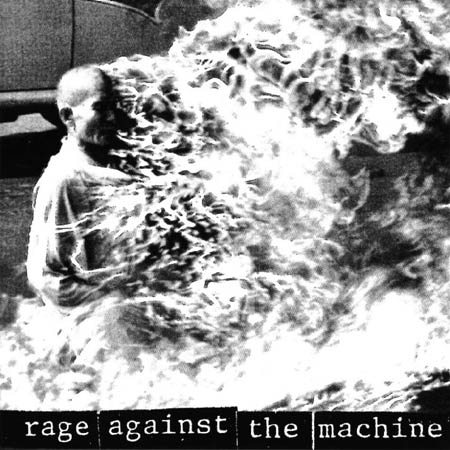
Robin Balliger* defines politics in popular music as ‘songs which either serve or struggle against dominant institutions’. The RATM* protest against Simon Cowell and the Christmas number one is an example of this. Popular music influences society, so it is no surprise that popular music has been used to highlight political issues throughout history. Longhurst stresses that there are two reasons for this connection, the way that music ‘is seen as oppositional to established values in the broadest sense’ and music that relates to a political theme ‘the interconnections between Rock and politics’. This strong relationship between music and political change is apparent with Band Aid in the 1980s where music artists encouraged donations in order to ‘feed the World’. This did not solve the problem but it did make a significant change. Music alone cannot achieve political change but it is a useful tool and helps raise global awareness.
*RATM- Rage Against the Machine
Sunday, 7 March 2010
Does the emergence of the digital download signal the end for the music industry?
Digital technology (Internet downloads such as iTunes and Limewire) has revolutionised the way that we consume music. Illegal downloads and P2P sharing is theft and apparently killing the sales of CDs and ultimately the music industry (although the real reason isn’t clear). It has highlighted the negative effects and ignored the positive. Radiohead’s tracks were leaked onto Napster, which resulted in a top 20 USA hit and in 2000 number one in the Billboard 200 Album chart. Alderman discusses how the music industry ‘was banking on its control of songs that have now become seductive little packets of freely traded digits’. I believe that the music industry won’t end but will continue to develop. As Condry states ‘even if the RIAA manages to reduce p2p file-sharing in the US to Japan’s miniscule level, Japan shows us that preventing online sharing does not stop unauthorized copying’. Digital technology will always exist.