Saturday, 17 April 2010

Is the audience for popular music created by the music industry?

The music industry is in control of popular music and therefore the music itself is homogeneous (a formula to make profit). According to Shepherd* it has been described as ‘ one of the gatekeepers positioned between the music industry and its audience’. Therefore the audience of popular music must be increased by the industries marketing but does it create the audience? Hirsch* describes the music press as an ‘institutional regulator of music industry output that acts as a filter between the recording industry and its audience’. So, there is an important link between the two (the output), the audience could be down to marketing. However audiences may purchase popular music because they enjoy it. Homogenised music isn’t always a success and is sometimes a one off hit. Overall, the music industry creates the market but not necessarily the audience, it depends upon what the consumers like and the availability of it.

*J,Shepherd (2003) Continuum Encyclopedia of Popular Music of the World: Media, industry and society, Continuum International Publishing Group, p 40

* Hirsch in Shepherd

Picture from: http://www.goodbear.com/audience.jpg

Friday, 26 March 2010

UNCUT Review.

The entertaining monthly music publication Uncut is aimed towards music and movie fanatics. In fact, it is targeting the older male (30+) and the lengthy articles suggest it is aimed towards people with spare time to engage with the magazine. Extended articles and reviews are the primary features of this magazine with the main cover story spread over twelve pages. These lengthy articles are descriptive and provide insight into great rock music from The Rolling Stones to more recent artists and musical festivals. The magazine is wordy but employs black and white photos to illustrate the importance of influential artists and encourages the reader to remember their youth. Cinema reviews and adverts for the targeted audience such as laptops are also incorporated, and with each issue of Uncut the fans are given a free CD and a pass to remember their youth and gain knowledge about new and legendary artists.

Image from: http://ebook30.com/magazine/music/189362/uncut-april-2010.html

Saturday, 20 March 2010

Are Blackness and Whiteness useful concepts in the study of popular music?

Nothing is simply black and white, however these concepts can be useful in understanding the origin and influences of popular music such as life experience. Hatch notes how ‘pop music has always depended upon the interaction between white and black traditions’. ‘Rock and Roll came about from white people’s fascination with black music’ (Shank) but this works both ways, within new styles and fusions of music such as Bhangra we can see that ‘black music’ is also fascinated with styles typical of ‘white music’. Longhurst asserts that ‘artists like Apache Indian could be taken as an example of this phenomenon…music can not be seen as racially owned’. Sam Phillips believed that if he could discover a white man with the ‘’Negro sound’’ he would be successful. Artists such as Elvis blur the lines between ‘black’ and ‘white’ music and hence these concepts are ideological (Tagg),‘black’ and ‘white’ music are fused.

Image from: http://simplyartonline.net/elvis-presley-photograph.jpeg

Sunday, 14 March 2010

Can pop music achieve genuine political change?

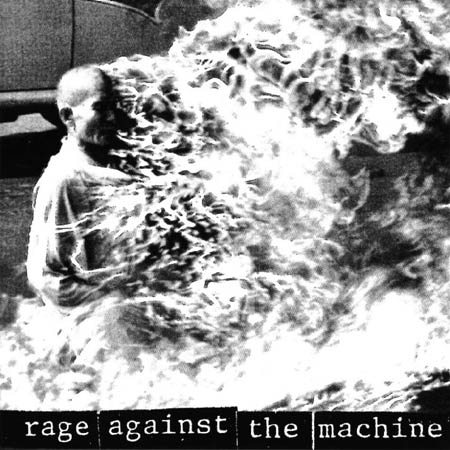
Robin Balliger* defines politics in popular music as ‘songs which either serve or struggle against dominant institutions’. The RATM* protest against Simon Cowell and the Christmas number one is an example of this. Popular music influences society, so it is no surprise that popular music has been used to highlight political issues throughout history. Longhurst stresses that there are two reasons for this connection, the way that music ‘is seen as oppositional to established values in the broadest sense’ and music that relates to a political theme ‘the interconnections between Rock and politics’. This strong relationship between music and political change is apparent with Band Aid in the 1980s where music artists encouraged donations in order to ‘feed the World’. This did not solve the problem but it did make a significant change. Music alone cannot achieve political change but it is a useful tool and helps raise global awareness.

*Robin Balliger referenced from-Key terms in popular music and culture By Bruce Horner, Thomas Swiss (chapter 5, p57)

*RATM- Rage Against the Machine

Image from: http://ultima-rock.wifeo.com/images/rage_against_the_machine_rage_against_the_machine_a.jpg

Sunday, 7 March 2010

Does the emergence of the digital download signal the end for the music industry?

Digital technology (Internet downloads such as iTunes and Limewire) has revolutionised the way that we consume music. Illegal downloads and P2P sharing is theft and apparently killing the sales of CDs and ultimately the music industry (although the real reason isn’t clear). It has highlighted the negative effects and ignored the positive. Radiohead’s tracks were leaked onto Napster, which resulted in a top 20 USA hit and in 2000 number one in the Billboard 200 Album chart. Alderman discusses how the music industry ‘was banking on its control of songs that have now become seductive little packets of freely traded digits’. I believe that the music industry won’t end but will continue to develop. As Condry states ‘even if the RIAA manages to reduce p2p file-sharing in the US to Japan’s miniscule level, Japan shows us that preventing online sharing does not stop unauthorized copying’. Digital technology will always exist.

Image from: http://ste5ens.files.wordpress.com/2009/04/1207236156_itunes_logo.jpg

Sunday, 28 February 2010

What is World music?

In my opinion World music is global music (The Beatles) as opposed to local music and can be anything that is sung in English. The term 'World music' conjures up images of unfamiliar cultures and instruments in my head. I agree with Deanna Robinson who points out that World music and the issue that it is often homogenous is because the ‘international and local sounds are being fused to create heterogeneous World Music’. To me, this suggests that World music has commercial and marketing implications as local sounds are being used to create a sellable product. Likewise, Frith notes that with global media large corporations can market any product anywhere.

The definition of World music is debatable, subjective and personal. Jan Fairley sums it up, ‘the relationship of the ‘local’ and the ‘global’ in popular music is one of the most complex, controversial and significant issues of the new millenium’.

Photo from:http://thumbs.dreamstime.com/thumb_357/1232912351p02ChG.jpg

Saturday, 20 February 2010

Is pop music a mass produced commodity or a genuine art form?

Art is a form of self-expression; a moment of inspiration and something that cannot be reproduced. However some people disagree, Adorno states that ‘the whole structure of popular music is standardized’. Nevertheless standardization has been evident within folk and religious music so why is Adorno only focusing upon popular music? He suggests that it is homogenous and exists to distract people from realising how dull life is, he does not seem to attempt to understand the passion behind popular music and art. This puzzles me because both art and music have different meanings to individuals. He considers that all popular music is a mass produced commodity, but CDs are mass produced and the music is different. I believe that popular music is a form of self-expression and therefore art. Alternatively, Adorno says it is ‘an all consuming production line that churns out mass produced, inferior commodities’. Both viewpoints are valid.

Image from:http://phramick.files.wordpress.com/2007/10/musical_note_logo.jpg